
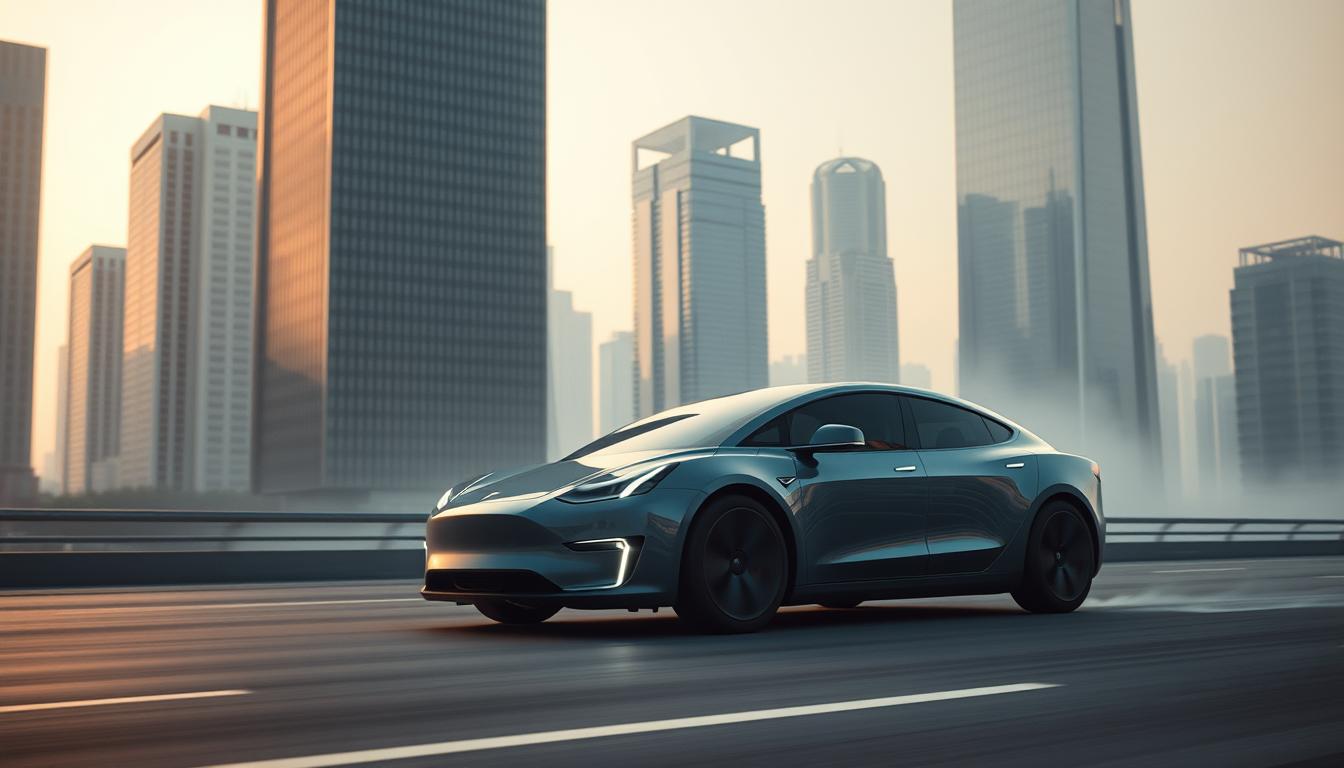
The transportation industry is on the brink of a major transformation. Companies are racing to develop self-driving technologies that could redefine how we move. Among these, one initiative stands out: the concept of a robotaxi service that could revolutionize urban mobility.
Elon Musk, the visionary behind this project, has set ambitious goals for the rollout of these vehicles. By leveraging advanced autonomous driving systems, the company aims to create a fleet of cars that operate without human intervention. This could disrupt traditional ride-hailing markets dominated by players like Uber and Lyft.
The economic and technological implications of this innovation are vast. From reducing traffic congestion to lowering emissions, the benefits could extend far beyond convenience. As the industry evolves, the future of transportation looks increasingly autonomous.
Key Takeaways
- Self-driving cars are set to transform urban mobility.
- Elon Musk has outlined an ambitious timeline for autonomous vehicle deployment.
- Traditional ride-hailing services face potential disruption.
- Autonomous systems could reduce traffic and emissions.
- The economic impact of this technology is significant.
Understanding the tesla robotaxi network potential
Urban mobility is evolving rapidly, with autonomous vehicles leading the charge. The concept of a self-driving ecosystem is no longer a distant dream but a tangible reality. By leveraging advanced technology, this initiative aims to create a seamless network of cars that operate without human intervention.
One of the key ideas behind this system is the involvement of vehicle owners. By allowing individuals to contribute their cars to the fleet, the company can build a robust network. This approach not only expands the service but also provides owners with significant financial incentives, potentially earning up to $30,000 per year.
The integration of Full Self-Driving (FSD) technology is a game-changer. This system enables cars to navigate complex urban environments with precision. Unlike traditional ride-hailing services, this model eliminates the need for a driver, reducing costs and increasing efficiency.
Early market expectations are high. Analysts predict that this innovation could disrupt the transportation industry. With lower operating costs and enhanced convenience, the service offers a competitive edge over established players like Uber and Lyft.
As Tesla’s robotaxi network prepares for launch, the focus is on scalability and regulatory approval. The future of urban mobility looks promising, with autonomy at its core.
The Evolution of Autonomous Transportation and Ride-Hailing Competition

The journey of autonomous driving has seen remarkable milestones over the years. From early experiments to advanced systems, the technology has evolved significantly. Companies like Waymo and Cruise have led the charge, launching fully driverless cars in select cities.
One of the key advancements is the development of Full Self-Driving (FSD) technology. This system allows vehicles to navigate complex urban environments with precision. It’s a game-changer for the industry, offering a glimpse into the future of mobility.
The competitive landscape has shifted dramatically. Traditional ride-hailing giants like Uber and Lyft now face new challenges. Autonomous services promise lower costs and greater efficiency, posing a threat to their dominance.
Analysts like Ken Gawrelski and Morgan Stanley have mixed outlooks. While some predict significant disruption, others believe it will take time for the technology to scale. “The road to full autonomy is still long,” says one expert.
Technological improvements have reshaped the market. For example, Waymo’s ride-hailing service, Waymo One, provides over 100,000 rides weekly in cities like San Francisco and Phoenix. This shows the growing acceptance of autonomous models.
As the industry evolves, traditional players must adapt. The rise of autonomous fleets could lead to pricing pressure and redefine the value of ride-hailing. The future of transportation is here, and it’s driven by innovation.
The Technology Driving Tesla’s Robotaxi Revolution
Innovative technologies are reshaping how we think about mobility. At the heart of this transformation is Tesla’s Full Self-Driving (FSD) software. This advanced system uses a camera-based vision approach, setting it apart from competitors who rely on LiDAR technology.
Unlike LiDAR, which uses laser sensors to map surroundings, Tesla’s cameras mimic human vision. This method allows for real-time data processing and adaptability. It’s a cost-effective solution that scales well for large fleets.
AI training and data collection are key to FSD’s success. Tesla’s vehicles gather millions of miles of driving data annually. This information is used to improve algorithms, making the system smarter and safer over time.
Onboard chip design also plays a crucial role. Tesla’s custom chips process data faster than traditional hardware. This leads to quicker reaction times and enhanced safety. For example, disengagement rates have dropped significantly, showcasing the system’s reliability.
These advancements are critical for the broader robotaxi revolution. By reducing operational costs and improving efficiency, Tesla’s technology paves the way for a sustainable future in urban mobility. As one analyst notes, this innovation could redefine how cities function.
| Feature | Camera-Based Vision | LiDAR Systems |
|---|---|---|
| Cost | Lower | Higher |
| Scalability | High | Moderate |
| Adaptability | Real-time | Limited |
As Tesla prepares for the launch of its robotaxi service, the focus remains on safety and efficiency. These technological breakthroughs are not just about creating autonomous vehicles—they’re about building a smarter, more connected future.
Economic Impact and Market Potential of Robotaxi Services

The economic landscape of transportation is poised for a seismic shift. Autonomous vehicle services are not just a technological marvel—they are a financial game-changer. According to ARK Investment Management, the addressable market for these services could reach up to $5 trillion.
One of the key drivers of this growth is the cost-per-mile comparison. Traditional ride-hailing services often incur high driver-related expenses. In contrast, self-driving systems eliminate these costs, reducing the price per mile significantly. This competitive pricing could disrupt established players like Uber and Lyft.
Market projections indicate exponential growth in ride volumes. As more people substitute personal car commutes for autonomous rides, the demand for these services is expected to surge. This shift aligns with the Jevons Paradox, where dropping prices encourage higher consumption.
Daily commutes and ad hoc rides are set to transform urban transportation spending. For example, a single robotaxi could serve multiple users in a day, maximizing efficiency and reducing idle time. This model not only benefits consumers but also creates new revenue streams for companies.
Investors and analysts are optimistic about the economic opportunity. Lower operational costs and higher efficiency make this model attractive. As one analyst noted, “The financial potential of autonomous ride services is immense, with the ability to scale rapidly in urban environments.”
| Factor | Traditional Ride-Hailing | Autonomous Ride Services |
|---|---|---|
| Cost per Mile | $2.50 | $0.70 |
| Driver Costs | High | None |
| Scalability | Moderate | High |
As cities embrace this technology, the financial impact will extend beyond transportation. Reduced traffic congestion and lower emissions are just the beginning. The future of urban mobility is not just about getting from point A to point B—it’s about creating a smarter, more sustainable system.
Regulatory and Safety Considerations for Autonomous Vehicle Deployment
Deploying autonomous vehicles on public roads involves navigating a complex web of regulations and safety standards. Companies in this space face significant challenges, as rules vary widely across states. This patchwork of regulations can slow down the rollout of new technologies.
At the federal level, the National Highway Traffic Safety Administration (NHTSA) plays a key role. Recent investigations have focused on incidents involving automated systems. For example, NHTSA has pushed for recalls when systems fail to comply with traffic laws, highlighting the need for stricter oversight.
Safety statistics offer some encouraging signs. Autonomous systems have shown improvements in reducing accident rates and disengagement incidents. These advancements support the case for wider deployment, but concerns remain. Critics argue that fully autonomous systems are not yet ready for public roads.
The debate around liability is another major hurdle. In cases where accidents occur, determining responsibility is complex. Should the company, the driver, or the system itself be held accountable? This question remains unresolved, creating uncertainty for both manufacturers and consumers.
Proposals to change exemption caps could help. Currently, manufacturers face limits on the number of vehicles they can deploy without traditional controls. Raising these caps could accelerate the adoption of autonomous technologies. However, this must be balanced with rigorous safety testing.
Looking ahead, national standardization could simplify the regulatory landscape. A unified framework would reduce confusion and encourage innovation. As one expert noted, “Clear rules are essential for building trust in this emerging market.”
Despite the challenges, the potential benefits are significant. Autonomous vehicles could transform transportation, making it safer and more efficient. But achieving this vision requires careful navigation of regulatory and safety considerations.
Future Outlook: Changing Urban Mobility and Transportation Trends
The way we move around cities is about to undergo a dramatic transformation. Autonomous vehicles, particularly robotaxis, are set to redefine urban commuting. By 2030, experts predict that these self-driving services will become a dominant mode of transportation in major cities.
One of the most significant shifts will be the decline in personal car ownership. As robotaxis become more accessible and affordable, fewer people will need to own a vehicle. This change could free up vast amounts of urban space currently used for parking, allowing cities to repurpose these areas for green spaces or housing.
Public transit systems may also see a transformation. While some fear competition, others believe robotaxis could complement existing services by providing last-mile solutions. This integration could make public transportation more convenient and attractive to users.
From an economic perspective, the rise of autonomous ride services could lower transportation costs. Without the need for a driver, the price per mile could drop significantly, making it an affordable option for daily commuters. Additionally, the environmental benefits of electric robotaxis could help cities reduce emissions and meet sustainability goals.
Experts are optimistic about the timeline for widespread adoption. “By 2030, we expect autonomous vehicles to account for a significant share of urban travel,” says one analyst. This shift will require careful planning and regulatory support, but the potential benefits are immense.
| Aspect | Traditional Transportation | Autonomous Ride Services |
|---|---|---|
| Cost per Mile | $2.50 | $0.70 |
| Car Ownership | High | Low |
| Environmental Impact | Higher Emissions | Lower Emissions |
As cities prepare for this future, the focus will be on creating infrastructure that supports autonomous vehicles. From dedicated lanes to smart traffic systems, urban planning will play a crucial role in ensuring a smooth transition. The future of mobility is not just about technology—it’s about building smarter, more sustainable cities.
Reflecting on the Road Ahead: Final Insights on Autonomous Transportation
The future of transportation is being reshaped by groundbreaking innovations. Autonomous vehicles are at the forefront, promising to redefine how we move. These self-driving systems offer a glimpse into a world where convenience and efficiency take center stage.
However, challenges remain. Technological advancements must overcome regulatory hurdles and safety concerns. The market is competitive, with companies racing to perfect their models and gain public trust.
Economically, the shift to autonomous rides could lower costs per mile and reduce traffic congestion. Cities may see fewer cars on the road, freeing up space for greener urban planning.
As we look ahead, staying informed is key. The road to full autonomy is long, but the potential rewards are immense. The future of transportation is not just about getting from point A to point B—it’s about creating a smarter, more connected world.


