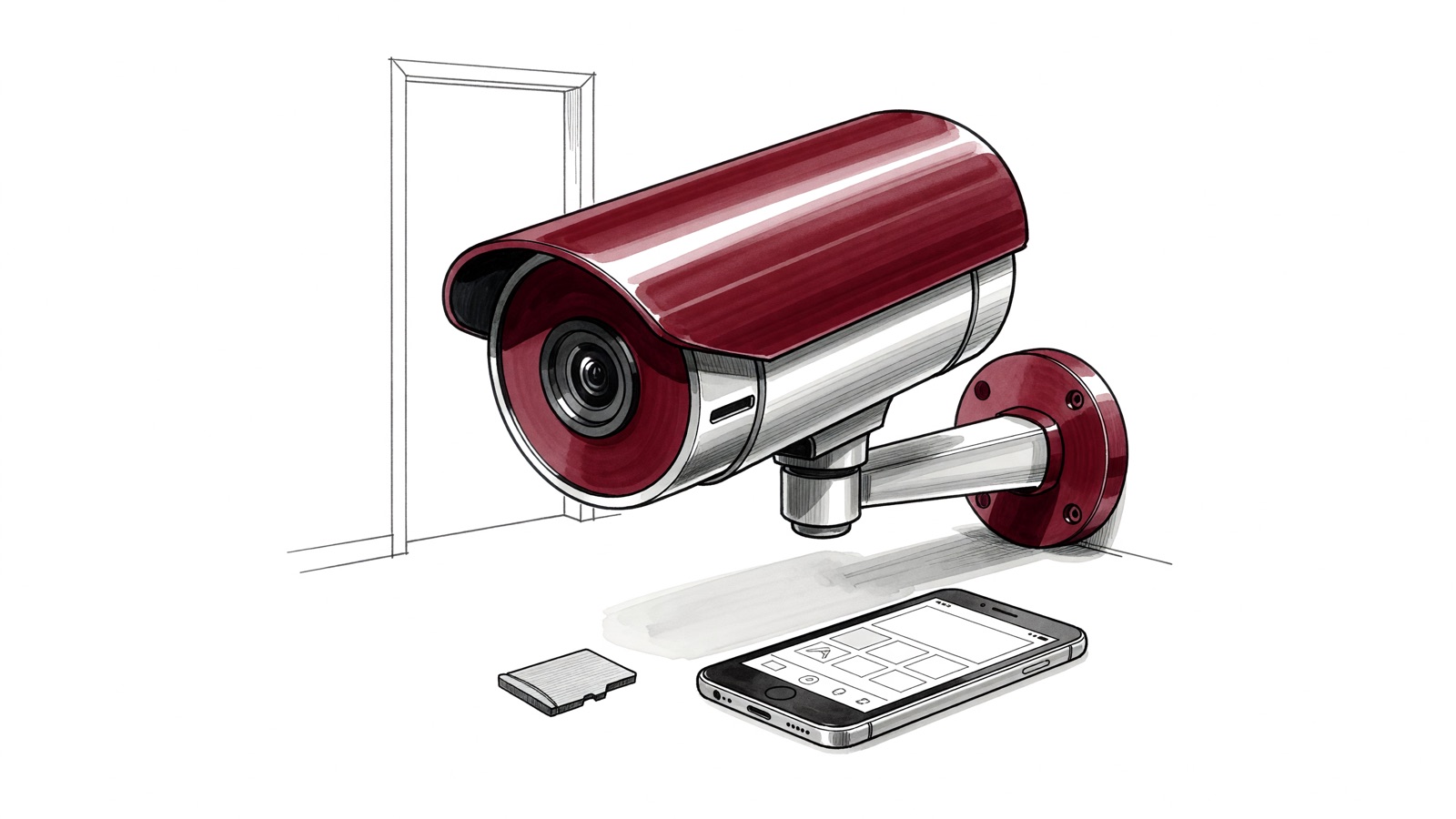
Look for a 4K front camera if reading a plate at dusk matters, and a rear camera if you park on the street. Parking mode usually needs a hardwire kit and a high-endurance microSD card, so budget for those alongside the camera.
Someone clips your car in a garage. You swap numbers, but two weeks later the other driver’s account has changed. Wirecutter interviewed a staffer whose footage helped after a parking-garage rear-end. His front camera did not capture the other car, but it showed he was driving normally and recorded the jolt. Even incomplete footage can be useful when accounts differ.
Do I need 4K on a dashcam or will 1080p still read a plate?
4K is worth considering for the front camera: a wide lens spreads the available pixels across the road. A 1080p camera can still work in daylight, but testers favor 4K for reading plates at dusk. Check actual night footage rather than relying on a “night vision” label.
NYT Wirecutter has researched more than 420 models and tested 61 since 2013. Its current criteria include a 4K front camera, HDR, and usable footage at night. The reviewers write, “‘Night vision’ is a marketing term. We tested the cameras at night to ensure they recorded legible license plates in the dark.” A plate 40 feet away on a wet street at 6:15 p.m. is a more useful test than a daytime resolution claim.
CNET notes that ultra-wide lenses make small text harder to capture; more pixels can help. Its compact pick, the Garmin Dash Cam Mini 3, records at 1080p. The reviewer liked its size but called the resolution a drawback. If a discreet camera for mostly daytime driving is the priority, that may be an acceptable trade-off.
Car and Driver shot a resolution chart in July 2026. With HDR on at 30 fps, the Viofo A329S captured readable plates and signs without losing detail in the shadows. That test does not make it the right camera for everyone. A “4K” listing alone cannot tell you how the recording looks; some cameras upscale, which reviewers can spot in the actual file.
Field of view involves a trade-off. Wirecutter looked for about 140 to 160 degrees, enough to cover a multi-lane intersection without making cars ahead too small. Car and Driver measured 140 degrees on the A329S front camera and 158 degrees on the Vantrue E1 Pro. A wider lens can also distort plate numbers.
Should I buy a two-channel dashcam or just a windshield camera?
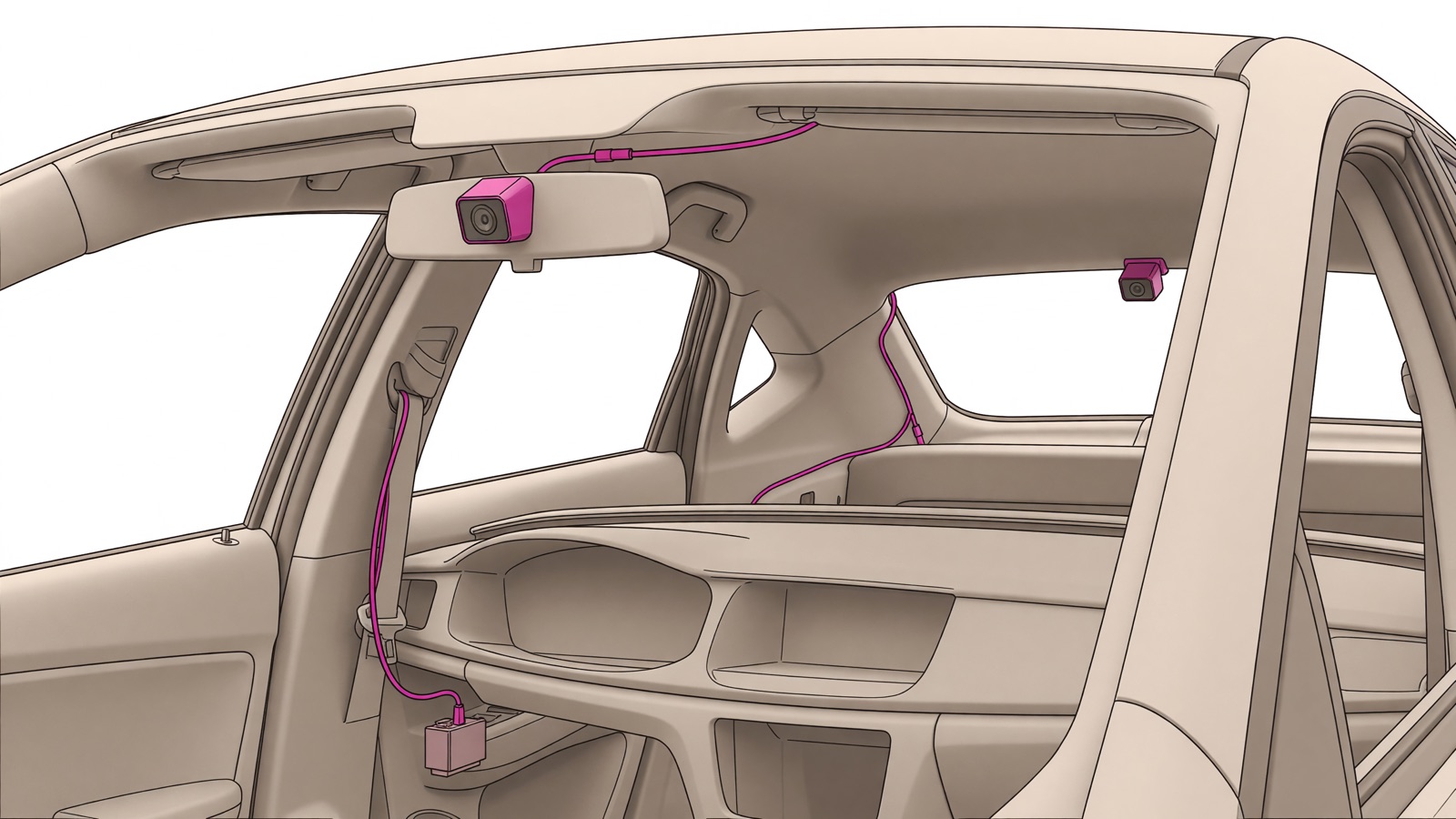
Consider a rear camera if you park on the street, parallel park often, or use a driveway where other people reverse. A front camera cannot show a car striking you from behind. Compare the price of a second channel with the cost of upgrading the front camera alone.
In Wirecutter’s parking-garage example, the front camera documented the driver’s behavior but could not identify the car behind him. Its top pick, the Viofo A229 Pro, comes in 1-, 2-, and 3-channel kits. Wirecutter listed the 2-channel kit at $260 in May 2026. For less, it listed the front-only Miofive S1 at $90 and the S1 Ultra with a 4K rear camera at $130.
CNET’s September 2025 table put a 3-channel Viofo A329S at $499, with 4K up front and 2K on the rear and interior. Car and Driver’s July 2026 update had the same family around $380 to $400, with front 4K, rear 1440p, and cabin 1440p. Those prices move. Interior cameras exist for rideshare. If you do not carry strangers, skip the cabin lens and spend the money on a rear camera and a card. A rear camera is a cable along the headliner. Suction cups peel in summer heat. Adhesive stays.
| Setup | Front video | Extra camera | Tester price snapshot |
|---|---|---|---|
| Tiny 1080p, windshield only | 1080p | none | Garmin Mini 3, $169 (CNET, Sept 2025) |
| Budget 4K, front only | 4K | none | Miofive S1, $90 (Wirecutter, May 2026); Vantrue E1 Pro, $110–$119 (CNET) |
| Front plus rear | 4K front; 4K or 2K rear | rear camera and cable | Miofive S1 Ultra, $130 (Wirecutter); Viofo A229 Pro 2-channel, $260 (Wirecutter) |
| Three-channel / SSD flagship | 4K front; 2K rear; 2K cabin | rear, cabin, often a hardwire kit | Viofo A329S, about $380–$499 depending on kit and date (Car and Driver July 2026; CNET Sept 2025) |
In these price snapshots, adding a rear camera can cost $40 to $170. A $500 kit also buys features such as a cabin lens and SSD support; compare the components before paying for them.
Does parking mode work if I only plug the dashcam into the cigarette lighter?
Usually not. If the lighter socket loses power when the ignition is off, the camera needs a connection to a live fused circuit for parking mode. Consumer Reports says most cameras need a hardwire kit. Some have a small internal cell but still require the kit for full parking features.
After describing motion- and vibration-triggered recording while parked, CR writes: “But most cameras require a hardwire kit for this feature to function.” If your lighter socket switches off with the key, the camera cannot record a scuff that happens at 11 p.m. and is discovered at 7 a.m.
A hardwire kit taps the fuse box, usually with an add-a-fuse, and includes a low-voltage cutoff so the camera quits before it kills the starter battery. Dutch auto club ANWB treated the kit as mandatory in its dashcam roundup. Kits on named models sat near €30 to €35. They also found the vibration sensor on every camera they tried was not sensitive enough for a light scratch, the kind someone leaves with a key. Time-lapse, one frame per second all night, was the mode that still showed plates in the dark. Impact-only parking mode is a bet that the other car hit you hard enough to wake the G-sensor.
Buffered parking mode saves a few seconds before the trigger. If a driver taps you and is already rolling away, those pre-roll seconds are the plate. Motion-only mode fills a card with pedestrians.
Budget the hardwire kit with the camera. ANWB warns that kits are not always interchangeable, so check compatibility with the camera brand. If you are not comfortable working in a fuse box, use an installer. A harness without a voltage cutoff can drain the starter battery. Wirecutter prefers a supercapacitor over a lithium cell because a closed cabin gets hot in summer.
What microSD card should I put in a dashcam that records all day?
Buy a high-endurance microSD card rated U3 and V30. Loop recording repeatedly writes and erases files, wearing the card over time; a general-use phone card may not last as long. Include the card in the camera budget even if it is sold separately.
SanDisk’s Max Endurance datasheet rates the 256GB card at “Up to 120,000 hours of Full HD video recording,” with write speeds up to 40MB/s and an operating range of -25°C to 85°C. That hour figure is Full HD, not 4K. I have not seen SanDisk publish a matching 4K rating on that sheet, so treat 4K life as unverified. U3 and V30 on the label means a sustained 30MB/s write, which is the floor for 4K capture.
CNET writes: “Almost no dash cams come standard with internal storage, so you’ll want to factor in the cost of a micro SD card.” It priced a reputable 256GB card at “around $20.” That price may change; check the card’s endurance rating as well as its price.
ANWB’s tip for a drive longer than 12 hours one way was 128GB minimum, 256GB if you can. Loop recording overwrites the oldest unlocked clips either way. The G-sensor is supposed to lock a crash file so the loop cannot eat it. On washboard roads, turn that sensitivity down or the card fills with potholes. Format the card in the camera. Parking mode wears a card faster than commuting. I have not verified a replacement interval that fits every brand.
Some flagship cameras now write to an SSD over USB-C. Car and Driver noted the A329S will take a microSD up to 512GB and an external SSD up to 4TB. For a commute, a V30 endurance card the manual lists as supported is enough.
Where can I legally mount a dashcam so I do not get a ticket?
Mount it in a small patch of glass behind the rearview mirror, not in the middle of your sight line. California writes the zones into statute. Most other states only say do not block the view. Check the state you actually drive in before you stick anything.
California Vehicle Code section 26708 bans objects on the windshield, then carves out video event recorders. The permitted squares are a seven-inch square in the lower corner farthest from the driver, a five-inch square in the lower corner nearest the driver and outside an airbag zone, or a five-inch square at the center uppermost portion of the interior of the windshield. The statute also requires a visible notice that a passenger’s conversation may be recorded.
The definition inside that section is stricter than a lot of modern cameras: the device “saves video only when triggered by an unusual motion or crash or when operated by the driver to monitor driver performance.” Always-on loop cameras may sit outside that letter. I am not a lawyer. The conservative read is dashboard mounting, or a camera that does lock event files, plus the passenger sticker if you record audio. California is also an all-party consent state for audio. Mute the microphone if you have not told riders.
Federal windshield rules for commercial trucks (49 CFR 393.60) are a different animal. They let certain safety tech sit up to 8.5 inches below the upper edge of the wiper sweep. That is not your Civic.
Suction cups fail in heat. Adhesive mounts stay put and leave residue. Put the lens in the wiper sweep so rain does not sit on the glass in front of it, and keep it out of the tint band at the top. Angle the horizon about a third of the way down the frame so you get road, not mostly sky. Audio is the quiet legal trap. Video of a public road is one thing. Recording a passenger who did not agree is another.
What do people still ask before they buy a dashcam?
Parking mode can drain a weak car battery if the voltage cutoff is set too low. GPS can stamp speed and location on a recording. Whether the clip can be used in a legal dispute is a separate question.
Will parking mode drain the car battery overnight?
It can, if the hardwire kit has no cutoff or the cutoff is set too low. A decent kit watches voltage and shuts the camera down before the starter battery dies. A no-name harness is how people wake up to a click. Do not leave parking mode running for a week at the airport on a ten-year-old battery.
Do I need GPS on the dashcam itself?
You need it if you want speed and location burned into the file without pairing a phone. Phone GPS that only works when an app is open will not help after a crash if the phone was in a cup holder. The clip is still useful without GPS. I have not verified that courts in every state demand that metadata.
Is it legal to record audio in the car?
In a one-party state, you can record a conversation you are in. In all-party states such as California, everyone in the cabin is supposed to agree, and California’s dashcam statute wants a posted notice. Turn the mic off if you carry kids, clients, or anyone who did not opt in. Video of the road does not require that conversation.
Does a 4K dashcam guarantee I can read every license plate?
No. Rain, a dirty windshield, and a plate at a sharp angle still win. Wirecutter’s line on the A229 Pro is the honest version: “Though no dash cam is perfect, the A229 Pro will give you the best chance of being able to read another car’s license plate in the widest variety of conditions.” Buy for the night test, then keep the glass clean.